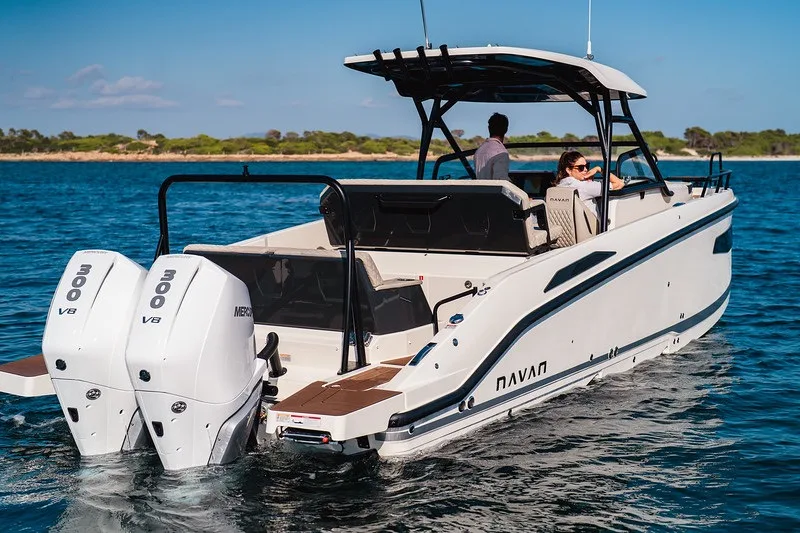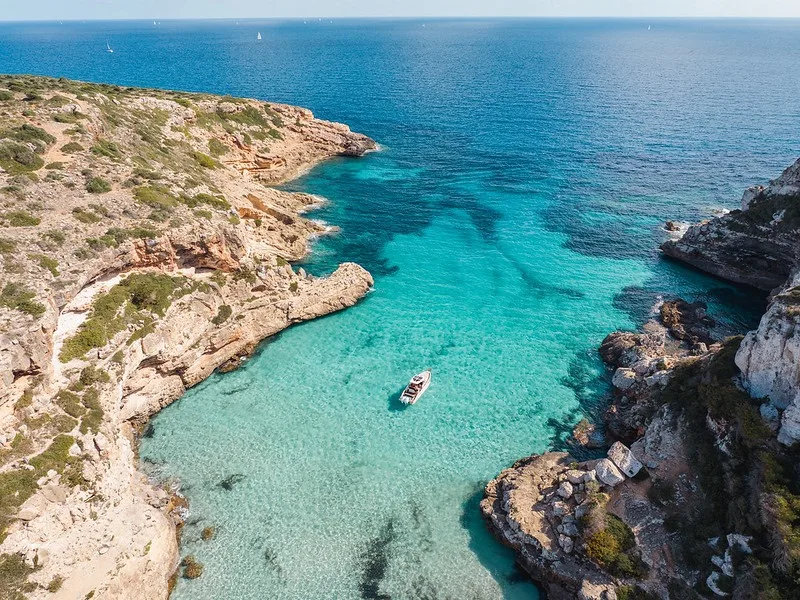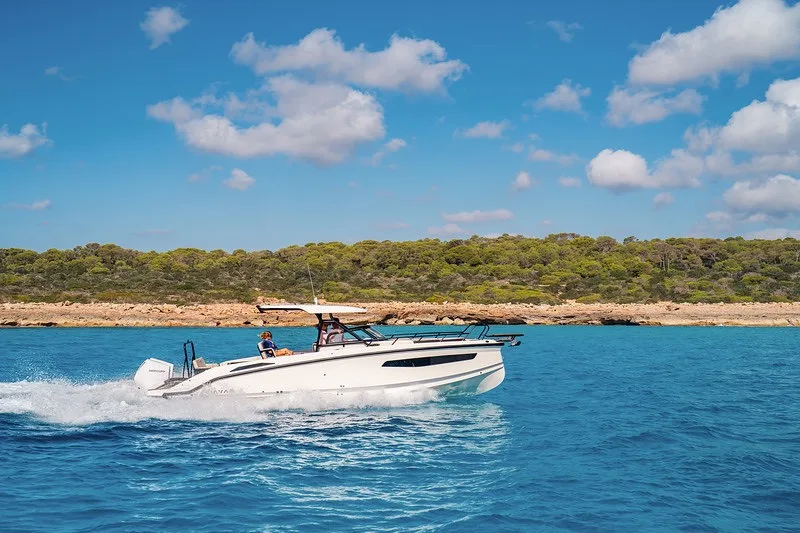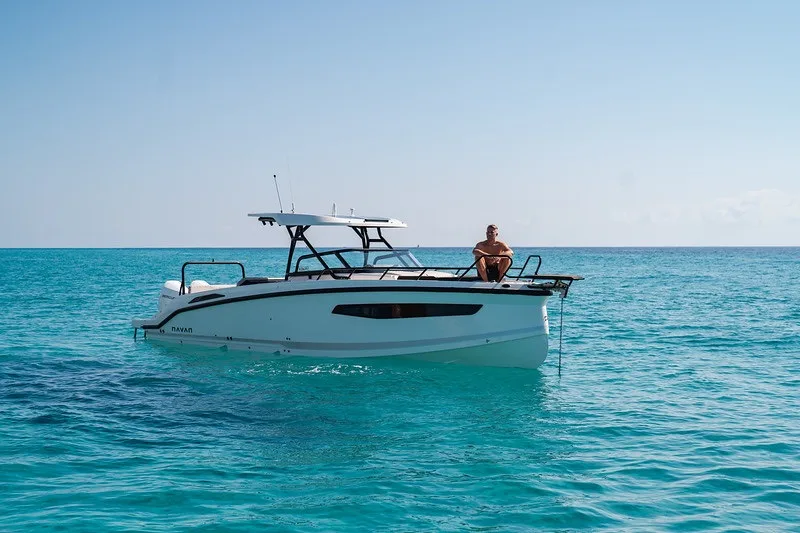
Yes, there are dolphins in Ibiza. Bottlenose dolphins live in Balearic waters all year round, and we see them from the deck of our NAVAN S30 often enough that guests ask about them on almost every charter. Here is the part most tour listings skip: nobody can promise you a sighting, and anyone who does is selling you something. What we can say, after years of working the same stretch of coast from Marina Santa Eulalia, is when your odds genuinely improve — and the answer is the quiet months, when the summer fleet has gone home and the sea belongs to the animals again.
The dolphins that actually live here
The species you are most likely to meet is the bottlenose dolphin: large, grey, unhurried, usually travelling in small groups. They are residents, not passing visitors. The water between Ibiza and Formentera sits over vast meadows of Posidonia seagrass — the same UNESCO-listed meadows that keep this sea famously clear also keep it full of fish, which is ultimately why the dolphins stay.
Further offshore, in deeper water, striped dolphins travel in bigger, faster pods. We cross paths with them less often — they prefer open sea — but on a flat day they are unmistakable: a whole line of backs breaking the surface at once.
Why autumn raises your odds of seeing dolphins in Ibiza
Look at the sea from a dolphin's point of view. In July and August the coast is a wall of engine noise: charter fleets, jet skis, day boats, ferries. Research on bottlenose dolphins in the Balearics points the same way our own logbook does — the animals keep their distance from heavy traffic and move back inshore once things quieten down. Sightings have been recorded along the very stretch between Santa Eulalia and Cala Pada, which happens to be our home water, minutes from Berth H17.
Autumn and winter also bring the conditions that make a sighting possible in the first place. On a glassy November morning a dorsal fin shows from a long way off; in August chop, a whole pod can pass a hundred metres away without anyone noticing. And the calendar is kind to your wallet: the quiet months are the cheapest on our price list, from €999 between October and April — we've written honestly about what a winter charter day here actually looks like.
What our sighting log really says
An honest log is mostly empty pages, so let's start there: there are weeks with nothing at all, and then a stretch where the dolphins seem to be everywhere. That is the nature of wild animals, and it is exactly why we refuse to sell them as a feature of the day. What the log does show is a pattern:
- Most sightings happen in passing. Not because we went looking, but underway between stops — a blow off the bow, a fin in the wake.
- Flat mornings beat every other moment. Calm sea, low light, no traffic. Often you hear them before you see them: a soft, sudden pfff of breath off the port side.
- Our best water is close to home. The run from the marina towards Tagomago — about twenty minutes — and the deeper water on the Formentera crossing have earned more entries than anywhere else.
When something breaks the surface, the skipper eases the throttles before anyone has finished pointing. From that moment on, the animals decide.

How we behave when they show up
Spanish regulations protect cetaceans, and the rules we run on board are stricter still — because they produce better encounters:
- Throttles come back to idle, and sometimes the engines go off entirely. The silence is half the experience.
- We hold a steady, parallel course. Never through a pod, never behind it, never chasing.
- The dolphins choose the distance. If they want to ride the bow wave, they will come to you — and bottlenose dolphins often do.
- Nobody goes into the water with them. However tempting: it stresses the animals, and it isn't allowed.
Guests sometimes ask whether we can "find" dolphins with the chartplotter. We can't — the Simrad shows depth and course, not dolphins. What works is much older technology: many pairs of eyes, calm water and patience.
Raising your own odds, honestly
If seeing dolphins matters to you, stack the deck the way we would: book in the quiet season, take the morning start, and if your dates are flexible, let the skipper pick a calm day. On board, give everyone a sector of horizon to watch — children take this job very seriously — and keep an eye out for seabirds working one patch of water, because where there is fish there are birds, and dolphins.
Then let the day stand on its own. In autumn you get the east coast almost to yourselves: empty anchorages, the clearest water of the year, Tagomago without another hull in sight. If dolphins appear, they are the headline. If they don't, they were never the point — they are the reward this coast occasionally hands to people who come when it's quiet. Either way, the day starts from Santa Eulalia, and the log gains another page.