The hidden coves of north Ibiza stay empty for the simplest reason in geography: there is no coastal road. Between Portinatx and Cap Nunó the island shows the sea its wildest face — cliffs climbing past 200 metres, villages set far inland, and every path down to the water a serious hike over loose stone or, in one famous case, a fisherman's ladder with rope sections. From the water, those same coves are two minutes of anchor chain. This is the north-coast chapter of our wider guide to Ibiza's boat-only beaches: six stops in the order our skipper reaches them on a round-the-top day from Santa Eulalia, each with an honest note on land access — because a couple of them you genuinely can reach on foot, if you are determined.
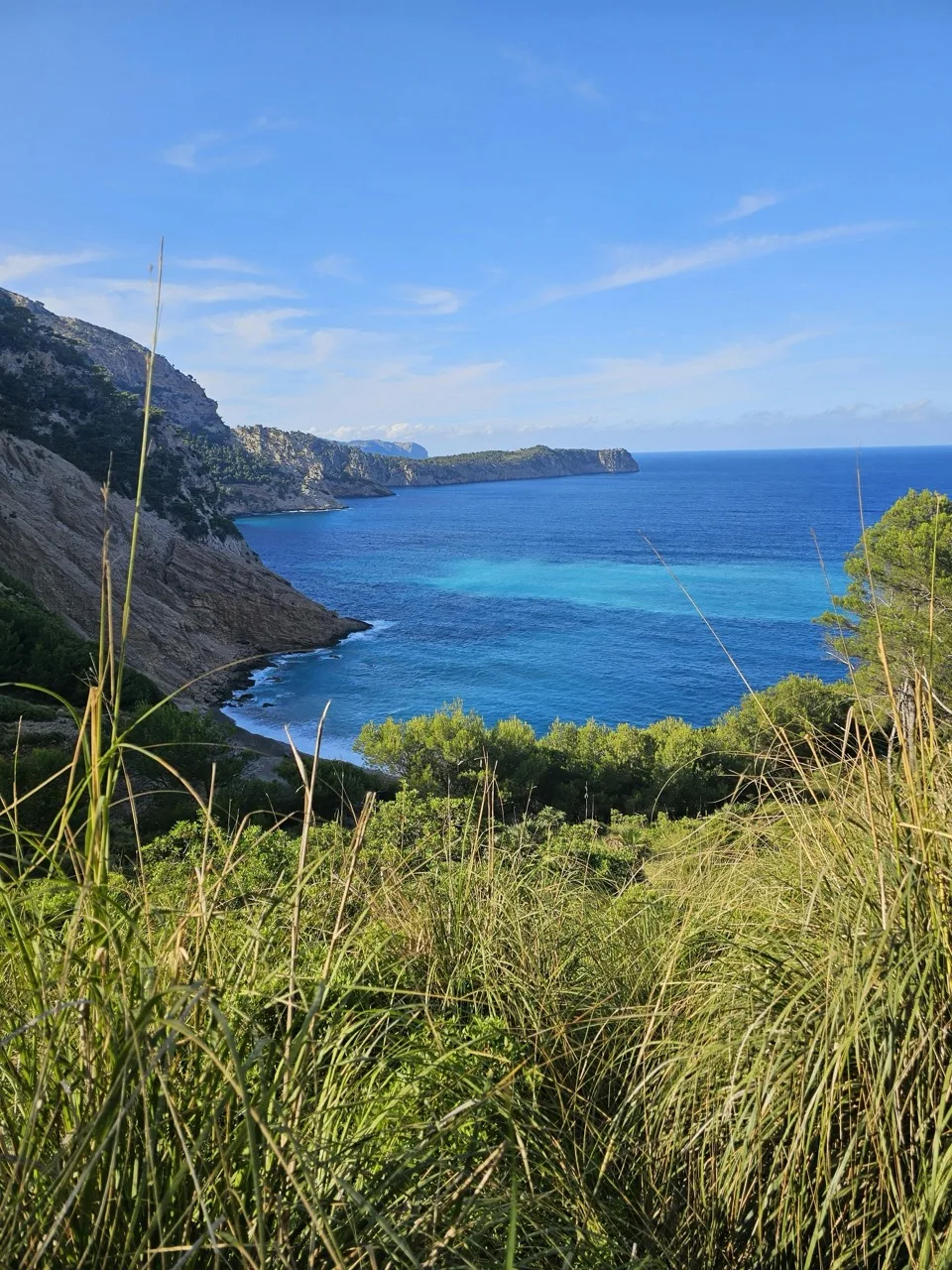
Port de ses Caletes: boathouses at the foot of the Mala Costa
Honesty first: you can drive here. What the map hides is that the access road is one of the longest, narrowest and most confusingly unsigned of any beach on Ibiza — steep single-track in places, with "Propiedad Privada" signs that make you doubt every junction. By boat it is a straightforward stop beneath the cliffs of the Serra de la Mala Costa, close to the island's remotest corner. The cove itself is a miniature: a strip of pebbles, a row of fishermen's boathouses, gin-clear water over stone. It faces due north, fully exposed when the Tramuntana blows — and mirror-flat on a southerly day. There are no services at all, which is exactly the point.
Es Canaret: the cove an estate could not close
A short hop east of Benirràs, between it and Cala Xarraca, lies a small cove of transparent water and old boathouses with an unusual history. The land path crosses the grounds of the former Siegfried Otto mansion, and the estate tried repeatedly to shut it — and failed, because beaches in Spain are public domain, which is why the marked "Sendero Público" still exists. In practice almost nobody finds the entrance, so most visitors arrive the way we do: by sea. Even in August it stays quiet. North-facing like the whole coast, so save it for a southerly-wind day.
Illa Murada: circle it, snorkel it — never land on it
Off Port de Sant Miquel, about 200 metres from shore, a walled islet rises on 25-metre cliff faces opposite the Torre des Molar watchtower. On its top sit the ruins of a stone-and-mortar construction that may go back to Phoenician times — "Murada" means walled. Be clear about the rules: this is a protected micro-reserve of 17,500 square metres with its own lizard subspecies and endemic snails, and landing is not allowed. No loss, because the prize is under the surface. Tunnels run through the islet, divers know a grotto with windows of light at around fifteen metres, and the walls are grown over with sponges and starfish. We circle slowly, cut the engines, drop the ladder and hand out the snorkelling gear that is always on board.
Es Portitxol: a horseshoe of fishermen's huts
Below Cap Rubió, Es Portitxol is the north coast's poster image: a near-perfect horseshoe of pebbles ringed by traditional casetas varadero — the old boat huts — with crystal-clear water over a pebble-and-rock seabed. On land it costs you 25–30 minutes down from the Isla Blanca urbanisation, first on a ruined stretch of asphalt, then a cliff-edge dirt path marked with blue arrows, slippery after rain — and a good half hour back up in the afternoon heat. From the deck, the horseshoe simply opens in front of the bow. It faces northwest: well sheltered in south and east winds, exposed when wind or swell arrive from the north. Bring everything you need; the cove offers nothing but itself.
Cala d'Albarca: an amphitheatre 200 metres tall
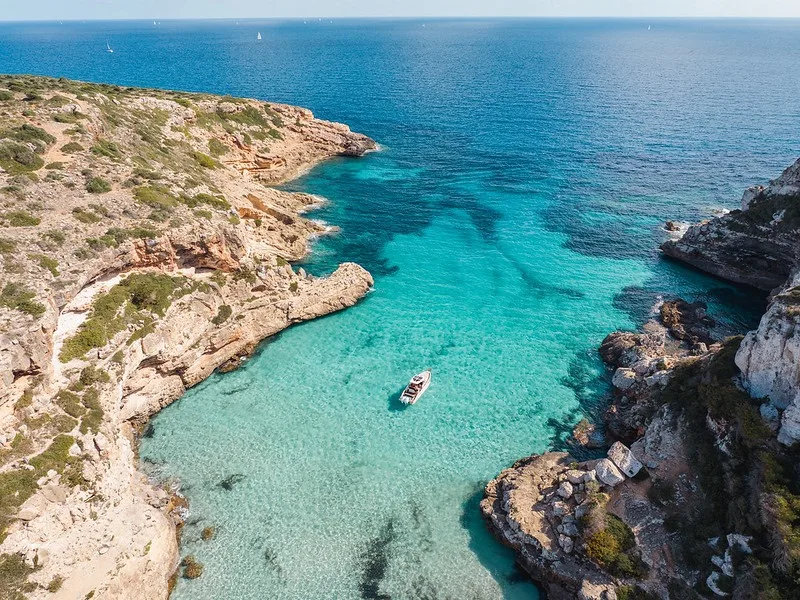
One of the biggest and wildest bays on the island, Cala d'Albarca is an amphitheatre of cliffs exceeding 200 metres — no sandy beach, just boulders, rock and remarkably clear water. On land you take a dirt track from Sant Mateu to a rough parking spot, then descend 30–45 minutes on loose stone, with a hard climb waiting at the end of the day. Most people who ever see Albarca properly see it from the water, and that is also how it impresses most: we throttle right down and run slowly, close under the walls, where the engine note comes back off the rock and conversation tends to stop by itself. Open to the northwest, so it wants a settled or southerly day.
Ses Balandres: the hardest beach access on Ibiza
Opposite the Ses Margalides islets, about 1.9 kilometres north of Santa Agnès de Corona, hides a tiny rocky cove that is widely described as the hardest beach access on Ibiza: a rickety wooden fisherman's ladder, three or four rope sections and a final rock wall of some fifteen metres, 45 to 60 minutes one way — strictly for fit hikers with a head for heights. The ladders and ropes are maintained informally by local fishermen. From the sea it is the easiest thing in the world: a simple approach, the anchor down, and a swim where almost nobody ever swims, sheer cliffs on three sides. Northwest-facing and exposed to north and west winds; calm on southerly days.
Reading the wind: when the hidden coves of north Ibiza go flat
Every cove in this article faces north or northwest, and that single fact is the key to the whole coast. On a south or southeast wind the north shore lies in the island's lee and the water turns to glass — those are the days this route was made for. When the Tramuntana blows in from the north, the same coves take wind and swell head-on, and we point the bow somewhere sheltered instead. Our skipper reads the forecast the evening before and will tell you straight whether tomorrow is a north day. If your dates are flexible, our month-by-month look at Ibiza's boat season shows when settled days are most common.
How the round-the-top day works from Santa Eulalia
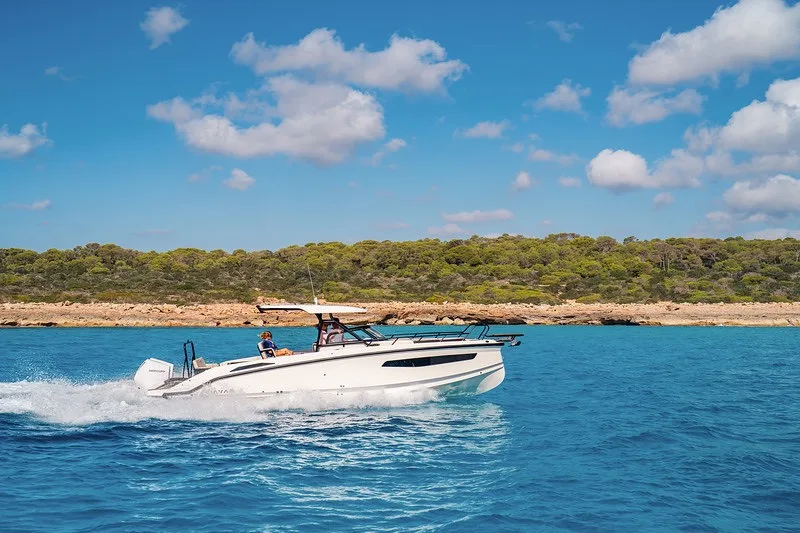
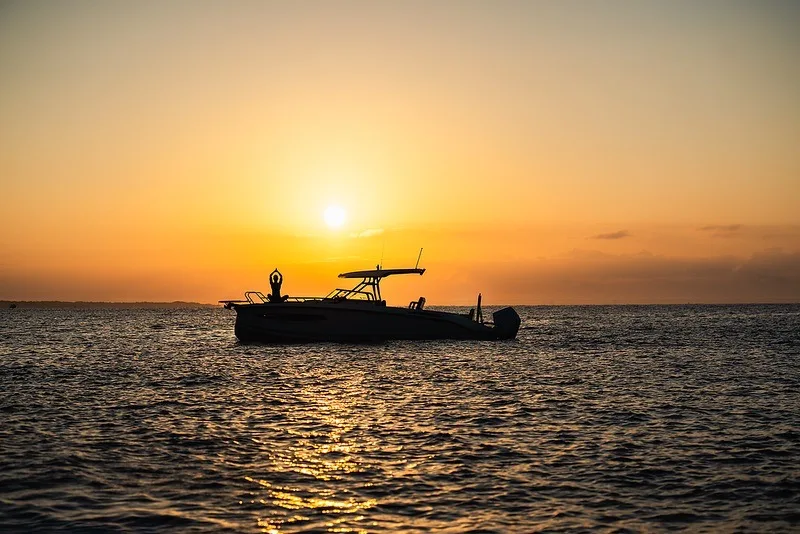
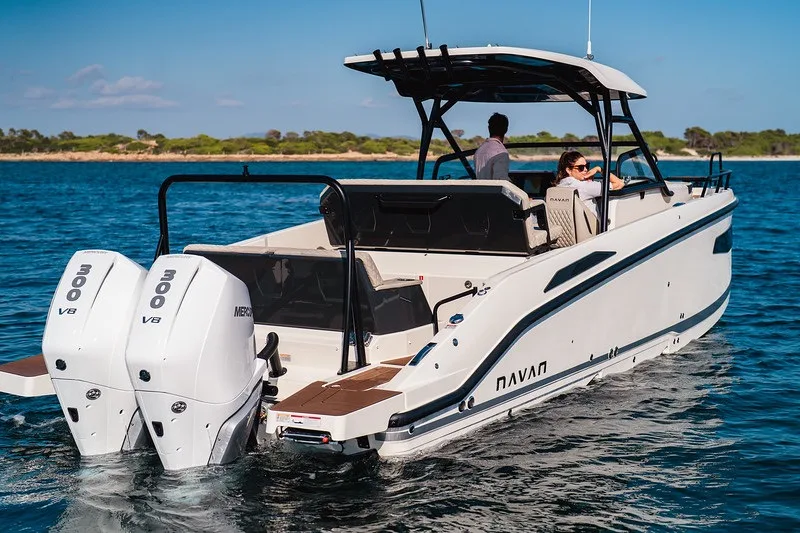
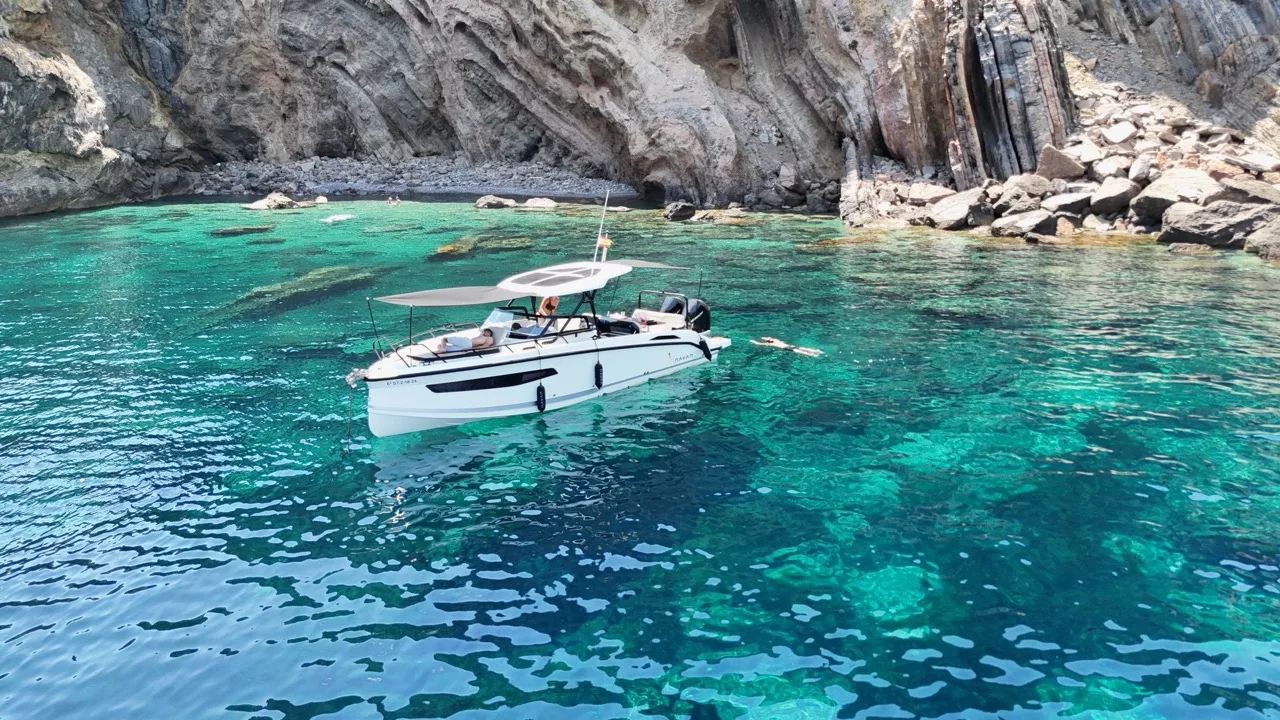
From Berth H17 in Marina Santa Eulalia, the north is a full-day route: eight hours, typically 10:00 to 18:00. The first stretch runs through our home water on the east coast, past Es Canar and Tagomago, then round the northeast corner — and from there the coast simply empties. The NAVAN S30 was built for exactly this kind of day: shade sails fore and aft for the hot hours, a private toilet below deck, cold drinks within reach of the teak table and snorkelling gear included — which matters on a coastline where not a single stop has so much as a kiosk. Up to ten guests, skipper always included. Tell us what kind of day you want — long swim stops, the Illa Murada snorkel, a slow half hour under the Albarca walls — and we will build the route around the wind, not the other way round.