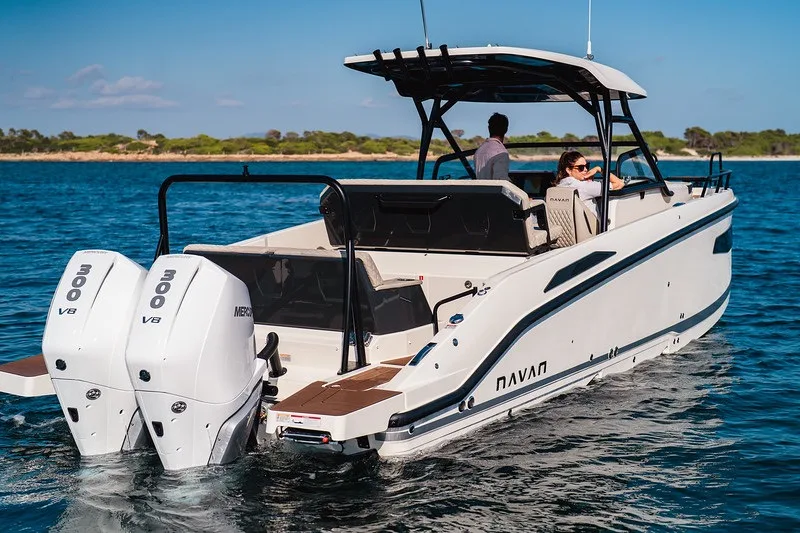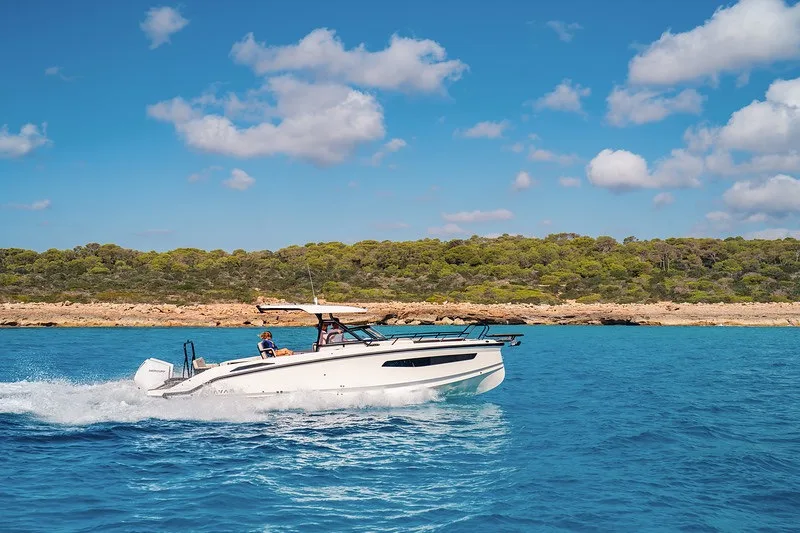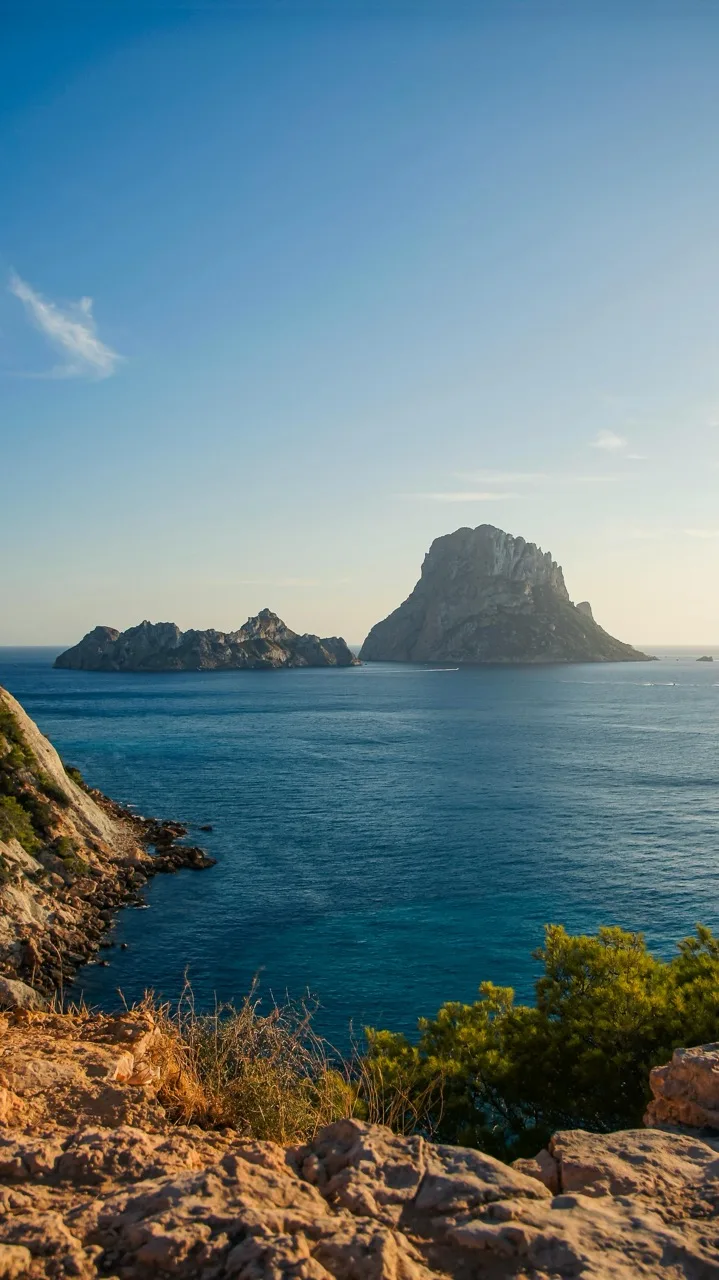
Let's answer it straight away: no, Es Vedrà is not magnetic, there is no drowned city at its feet, and in all our seasons anchoring beneath the rock our compass has never done anything more mysterious than point north. But the Es Vedra myths and legends deserve better than a one-line debunk. We run our west-coast charter past this rock almost every week, and up close some of the stories turn out to be stranger — and far better documented — than the versions circulating online. Here is every major legend, tested from the deck of our NAVAN S30.
| Legend | The claim | Tested from the water |
|---|---|---|
| Magnetism | "The third most magnetic point on Earth" | No measurement supports it; our compass holds steady |
| Atlantis | A sunken city lies at the foot of the rock | It's a carved coastal quarry — and it never sank |
| Homer's sirens | The sirens sang to Odysseus here | Unprovable; scholars point to Italy — but the lore is old |
| Father Palau | A friar saw apparitions on the rock | True story: he lived there in the 1850s and wrote it down |
| The 1979 UFO | Strange red lights forced a jet to land | The diversion happened; the explanation is still argued |
The magnetism myth — and what our compass actually does
The claim you'll hear most often: Es Vedrà is the third most magnetic point on Earth, after the North Pole and the Bermuda Triangle — strong enough to scramble instruments and confuse homing pigeons. It's a wonderful line. It's also supported by no measurement anyone has ever published. Geologically, Es Vedrà is the same limestone as the cliffs facing it at Cala d'Hort: rock with barely any iron in it, which simply cannot generate a magnetic field of its own.
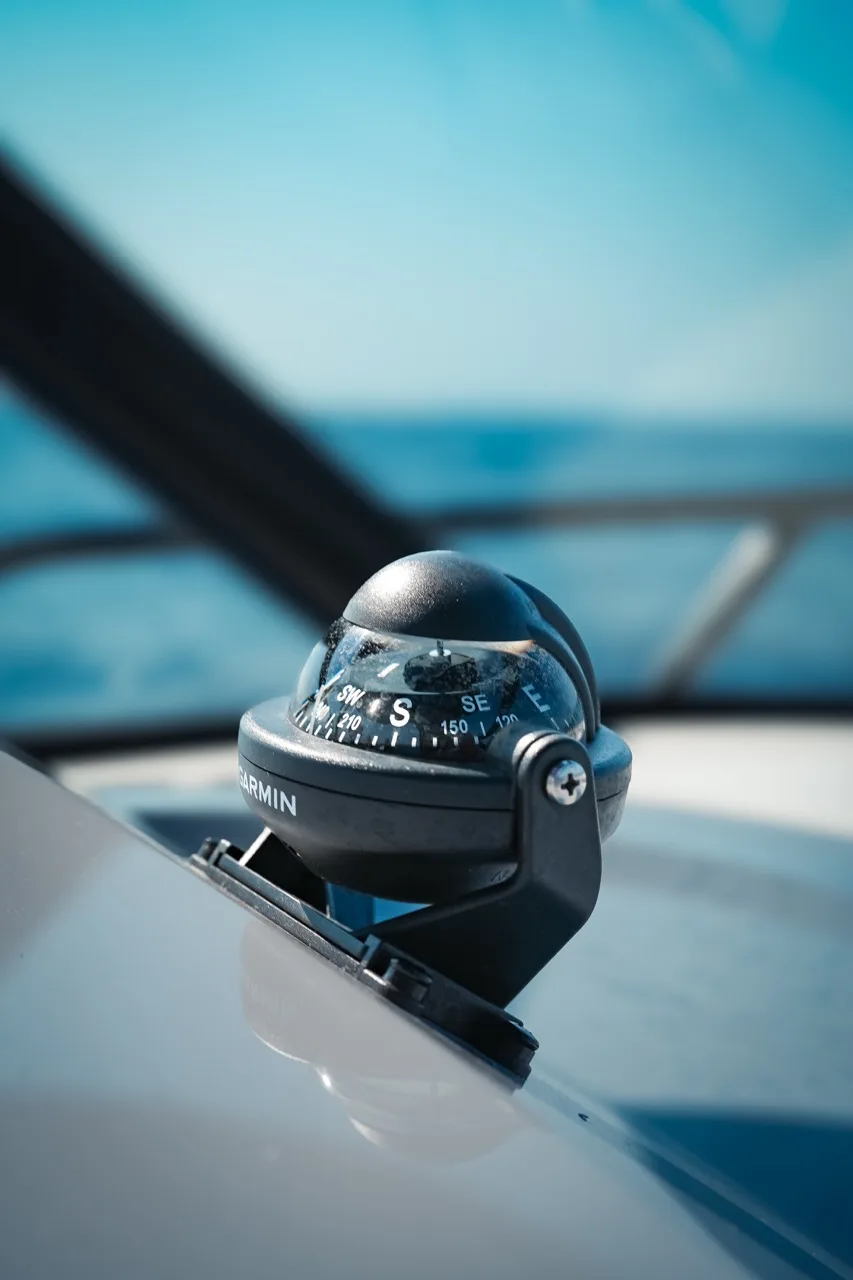
Our evidence is modest but relentless: the ball compass on our dash sits steady as we close in on the cliff face, and the Simrad chartplotter never drops its GPS fix. Guests film the compass almost every trip, waiting for the needle to spin. It never has. If the rock genuinely disturbed electronics, a charter crew that works underneath it week after week would be the first to complain.
Atlantis: the sunken city that never sank
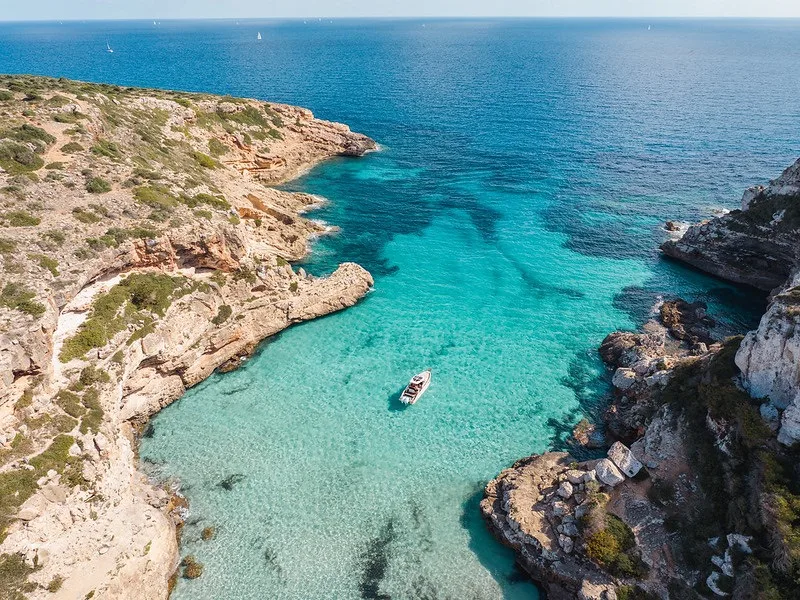
Half of this legend is real — just not the way it's told. On the Ibiza shore facing the rock lies Sa Pedrera de Cala d'Hort, an old coastal quarry where stone was cut for centuries; local accounts say blocks from here ended up in the walls of Dalt Vila. The quarrymen left behind geometric pools, straight-edged terraces and chiselled rock faces that, seen from the water, genuinely resemble a ruined city half-swallowed by the sea. In the sixties, Ibiza's hippies renamed the place Atlantis, and the name never let go.
So: no civilisation drowned here. The "ruins" were carved by working hands, and they sit above the waterline, not below it. With the steep cliff path now fenced off, a boat has become the realistic way to see it — one of several spots along this coast where that's literally true, as we've written in our guide to Ibiza's boat-only beaches.
Sirens, Odysseus and the goddess Tanit
Island lore claims the sirens who tried to lure Odysseus onto the rocks sang from Es Vedrà, and that seafarers held the islet sacred to Tanit, the Carthaginian goddess of Ibiza. The honest verdict: Homer never mentions Ibiza, and most classicists place the sirens off the Italian coast. The Tanit connection, though, is not internet folklore — the goddess really was worshipped on this island for centuries, and it's easy to understand why sailors gave this particular rock a story of its own. Watch it from a boat at dusk, falcons wheeling off the summit and the limestone turning copper, and strict scholarship starts to feel like poor sportsmanship.

The hermit who really did see visions
The strangest chapter is the best documented. In the 1850s Francesc Palau, a Carmelite friar exiled to Ibiza, rowed out to Es Vedrà and spent long stretches fasting and praying in a cave on the rock. His own writings describe luminous figures and celestial apparitions there — the original source of the islet's mystical reputation, a full century before anyone said "UFO". Palau was entirely real, and his cave is still up there somewhere in the cliff. Today the islet is a protected nature reserve: landing is not permitted, which suits the nesting falcons and, frankly, the legend too.
The 1979 UFO file
In November 1979, the crew of a passenger jet crossing this corner of the Mediterranean reported fast-moving red lights they could not identify, and made an unscheduled landing in Valencia. The "Manises case" became the most famous file in Spanish ufology, investigated by the military and argued over ever since — sceptics point to distant industrial flares, believers to the radar traces. Es Vedrà anchors the story mostly because Es Vedrà anchors every story on this coast. For what it's worth: in hundreds of trips we've logged falcons, shooting stars and one unforgettable green flash at sunset. Red lights, so far: zero.
Why the Es Vedra myths and legends refuse to die
Because the rock earns them. Es Vedrà rises nearly 400 metres sheer out of open water — no beach, no harbour, no buildings, no path to the top — and from the sea it arrives with theatrical timing: you round Ibiza's southern tip past Es Porroig and suddenly it fills the horizon. On our full-day Es Vedrà charter from Santa Eulalia we cruise south past the silhouette of Dalt Vila, let the rock grow slowly from the water, then drop anchor at Cala d'Hort — the rattle of the chain running out with that wall of limestone in front of you is an argument no fact-check can touch. Lunch, a swim, and the clear water of Cala Comte and Cala Bassa fill the afternoon. If you want the rock at its most mythological, aim for the end of the day — we've written before about golden hour from the water, and Es Vedrà is its undisputed lead actor.

Our verdict after years in these waters: four legends dissolve under a little scrutiny, one turns out to be solid history — and all five make more sense once the rock is towering over your own deck. Bring a compass if you like. Testing the myth is half the fun.