Straight answer first: on most of our charter days out of Santa Eulalia, nobody gets seasick — including the guests who step aboard convinced they will. Seasickness on a boat trip in Ibiza is far less likely than nervous first-timers expect, and it isn't luck. Summer mornings here are usually flat, the cruising legs are short, the coast never leaves your sight, and you spend most of the eight hours at anchor in coves where the boat barely moves. But "usually" isn't "always" — so here is the honest version: how we read the wind, why the boat itself matters, and which remedies actually do something.
Why seasickness on a boat trip in Ibiza is rarer than you fear
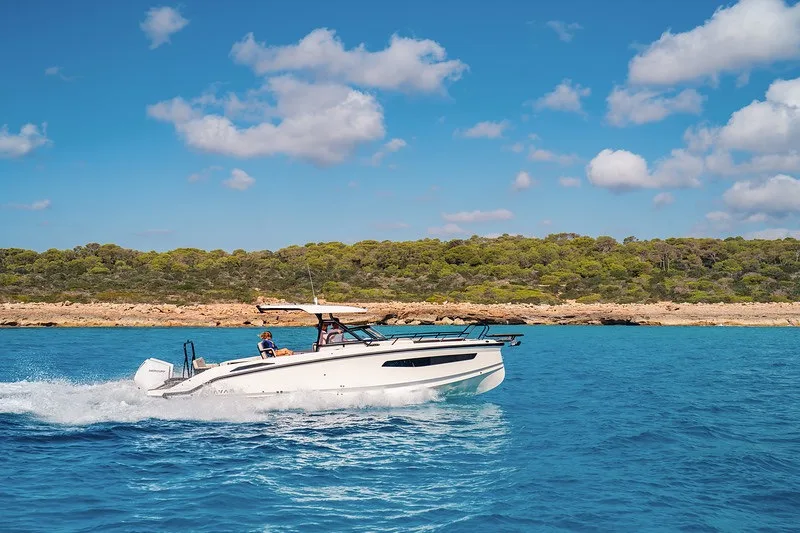
Most people's mental image of seasickness comes from a ferry deck, a deep-sea fishing trip or a sailing passage in real swell. A private day charter around Ibiza is a different kind of boating altogether. You hop along a coastline in a fast day boat, land in sight the whole time, with sheltered coves within a short run of wherever you happen to be. Around our home waters the legs are short — Tagomago is about twenty minutes from the marina — and even the crossing towards Formentera, the longest single stretch of any of our days, is a fraction of the day, not the day itself.
Timing works for you too. The sea around Ibiza tends to be at its calmest in the morning, before the thermal breeze builds in the afternoon — one reason our full day usually starts at 10:00. By the time the water gets any texture, you have hours of sea legs behind you. And of those eight hours, only a small part is spent underway. The rest, you are anchored, swimming and eating at the teak table, and the loudest thing on board is the ice settling in the cooler.
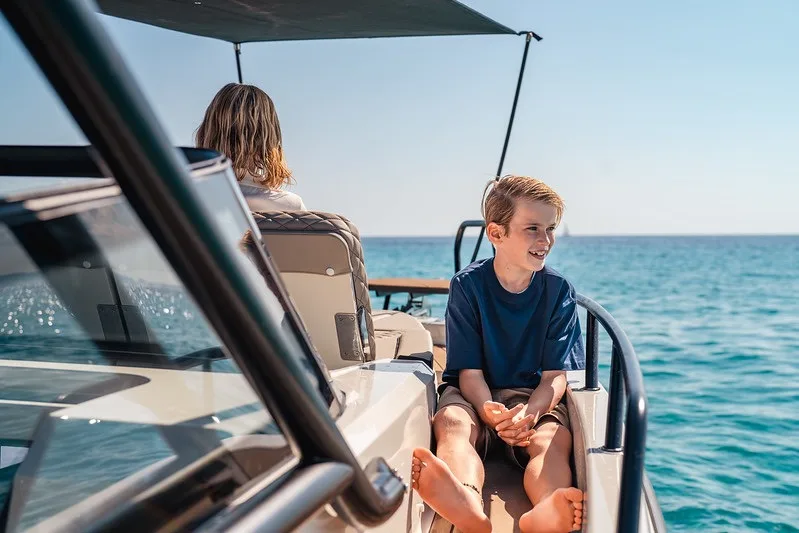
Our skipper reads the wind before you finish breakfast
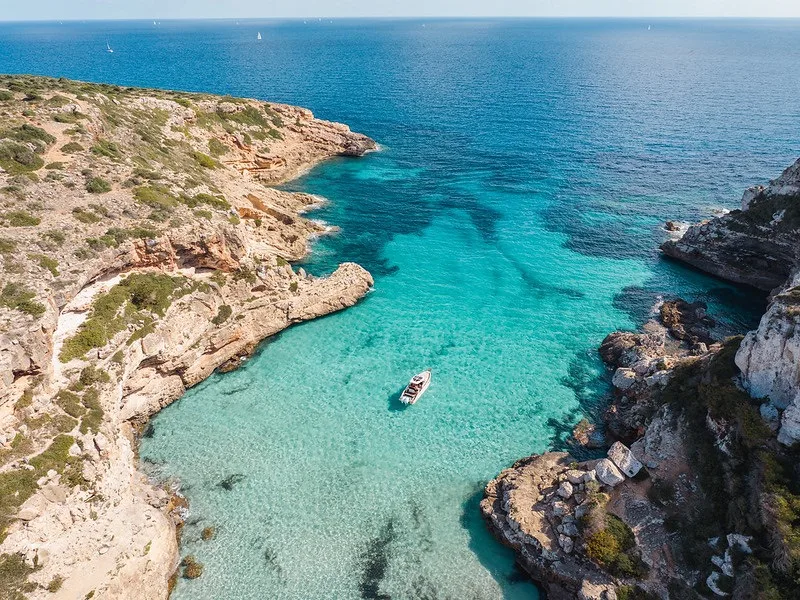
Every charter morning starts the same way: our skipper over the forecast, deciding where the island will be calmest that day. Ibiza is compact enough that there is nearly always a sheltered side. With wind from the west, the coast off Santa Eulalia lies in the island's lee and stays smooth while the far side gets choppy. When the northerly Tramuntana blows, we tuck in along the lee shore and choose coves that face away from it. It is one reason our sheltered east-coast home water is such an asset on breezier days.
And because the boat is yours for the day, nothing is fixed. If the crossing to Formentera looks bumpier than we would like, we say so honestly — then either time it for the smoothest window or suggest a calmer plan with the same ingredients: clear water, a long lunch, an empty cove. You decide; we advise.
A stable day boat that mostly lies at anchor
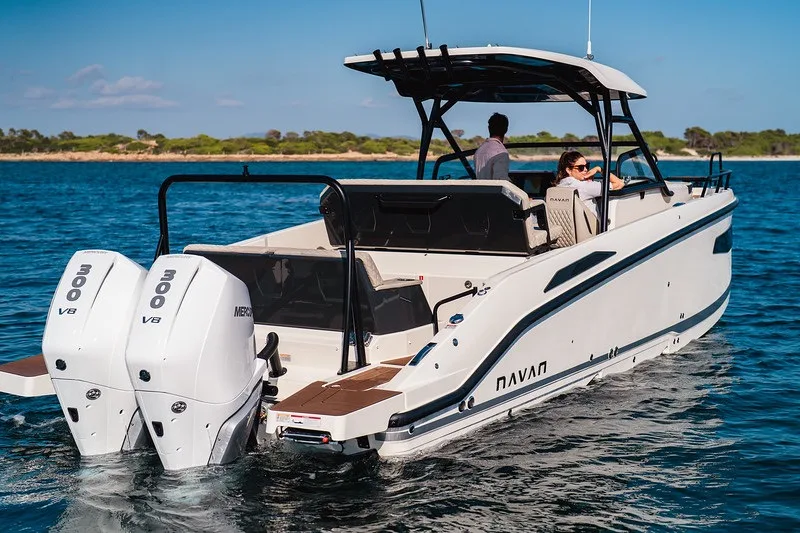
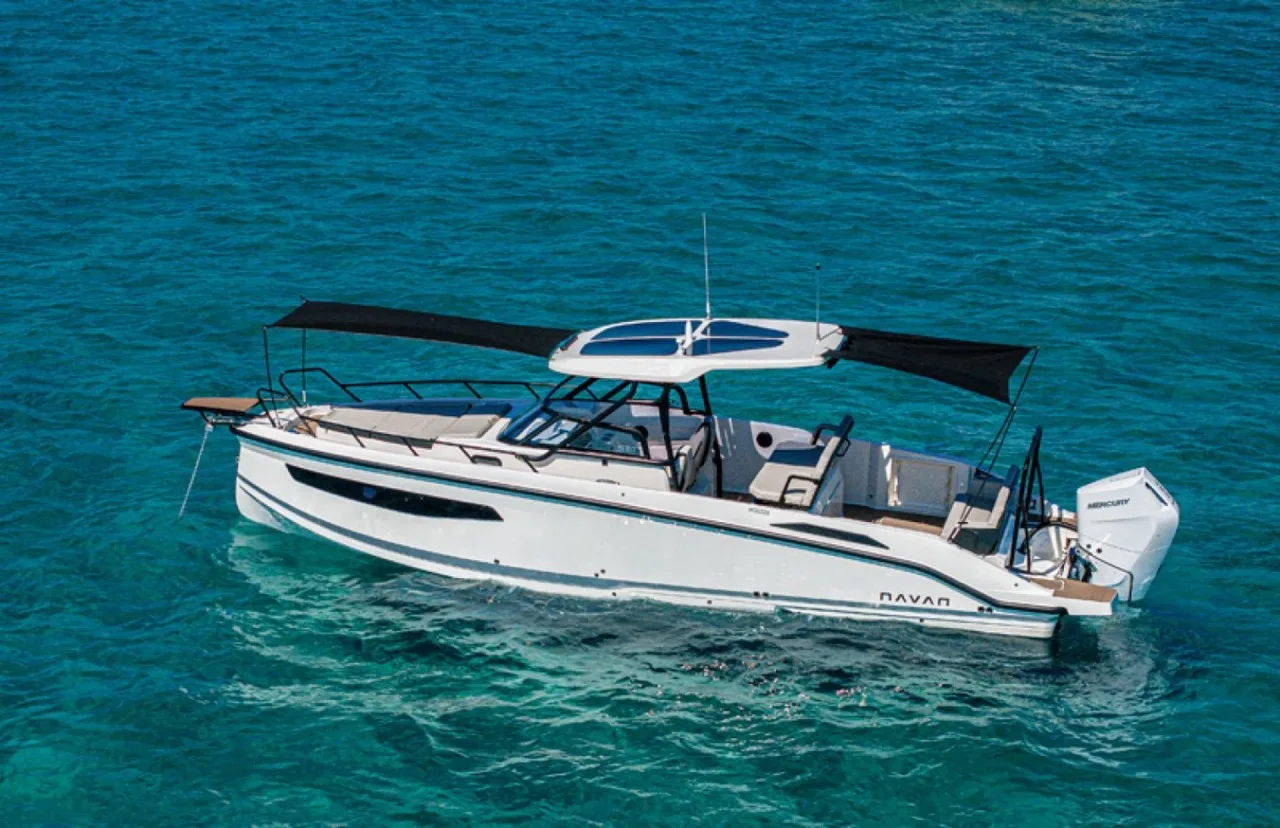
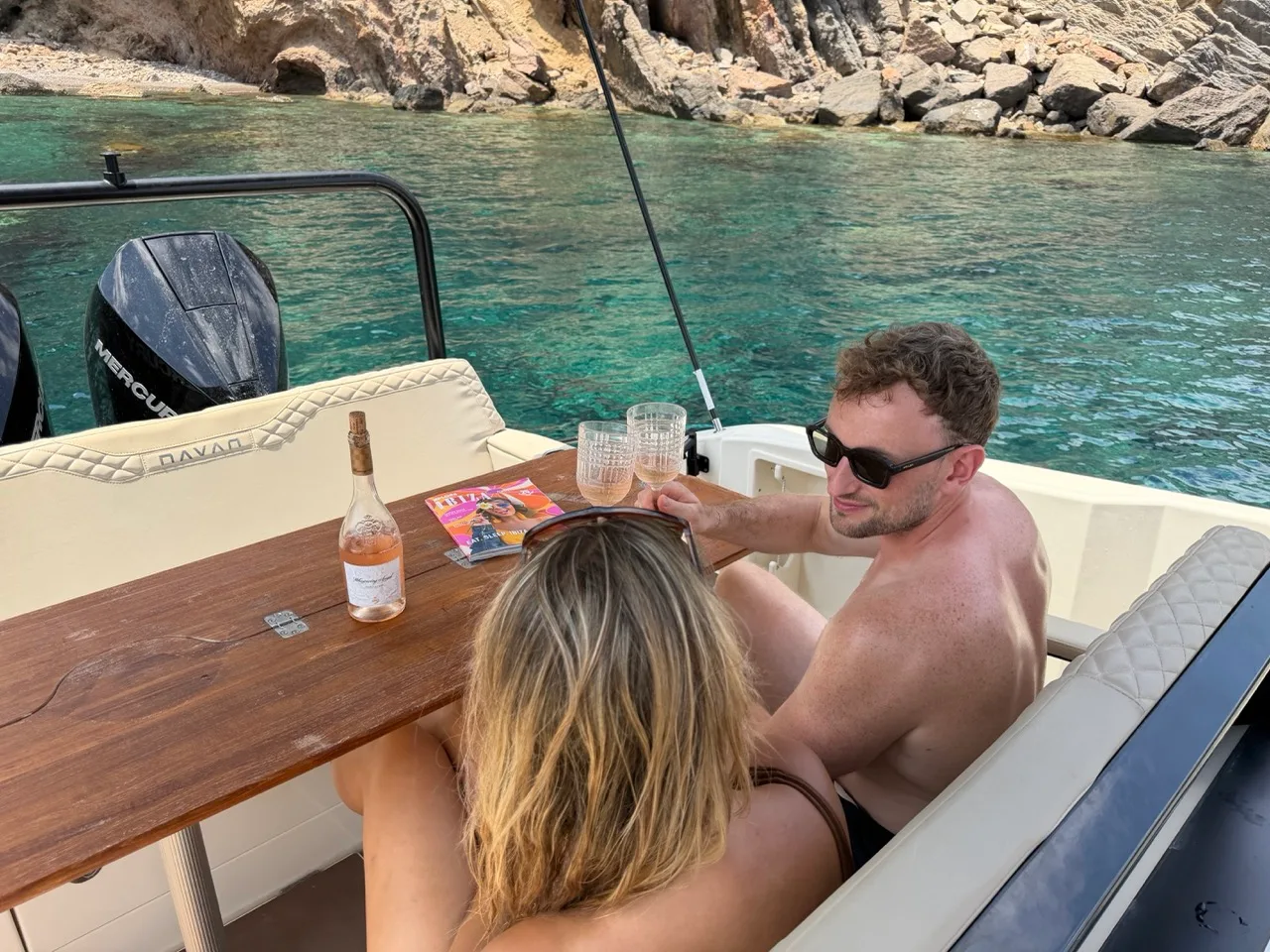
The NAVAN S30 helps more than most guests realise. It is a modern, stable day boat built for exactly this coastal work: the twin Mercury V8 outboards keep the underway legs short and the ride settled, and the black T-top with shade sails fore and aft keeps air moving across the deck — heat and stuffiness bring queasiness on faster than waves do. At anchor in a flat cove there is barely any movement to speak of: the glasses on the folding teak table hardly tremble, and the quilted bow sunpads lie as still as a lounger by a pool. There is a private toilet below deck for quick visits, but if you are feeling delicate, fresh air on deck is where you want to be.
What actually works against seasickness
After years of taking first-timers out, this is the shortlist we stand behind:
- Sleep, and go easy the night before. A short night and a heavy hangover are the two most reliable ways to feel miserable afloat.
- Eat a light, normal breakfast. An empty stomach is worse than a full one.
- Take travel-sickness tablets before departure, not after. The classic over-the-counter remedies work preventively — ask your pharmacist which one suits you.
- Ginger. Sweets, tea or capsules — gentle, and a quiet favourite among our guests.
- Eyes on the horizon, not on a screen. Underway, skip reading and scrolling; a fixed screen over a moving sea is the classic trigger.
- Sit where the ride is softest. Midships or on the aft bench, facing forward.
- Tell the skipper. He can ease the throttle and take a softer angle across any chop — a small course change makes a surprising difference.
- Acupressure wristbands, if you like. The evidence is mixed, but they are harmless and some guests swear by them.
Tablets, ginger and wristbands weigh nothing — tuck them in with the rest of what's worth bringing on a day charter.
And if someone does turn green anyway?
Then we do what a private boat does best: find flat water fast. Anywhere on our routes we are minutes from a sheltered cove, and stillness is the best medicine there is — most queasiness fades quickly once the anchor is down. A swim helps more than people expect; cool water and a fixed horizon reset the system. There is no timetable and nothing to push through: the day simply reshapes itself around whoever needs it to.
If one hesitant person is holding your group back from booking, this is the article to send them. Even better: tell us when you book that someone is nervous. We will start the day on the sheltered side of the island and plan the calmest eight hours the forecast allows.