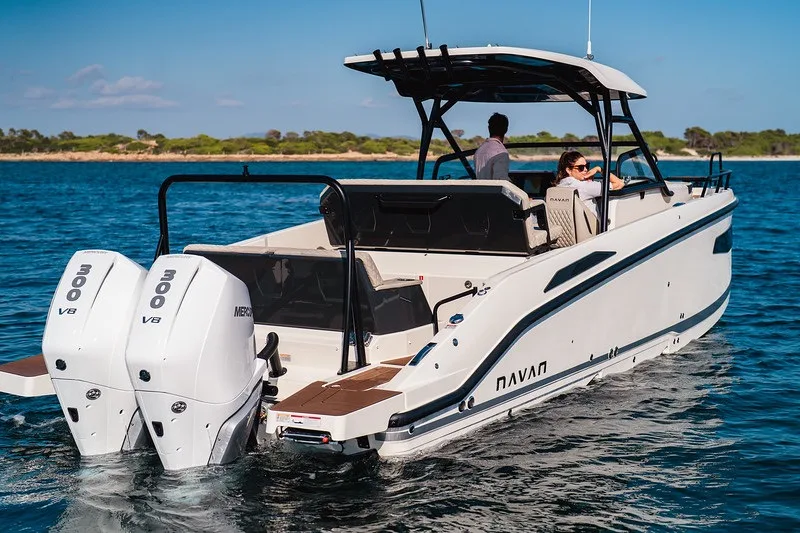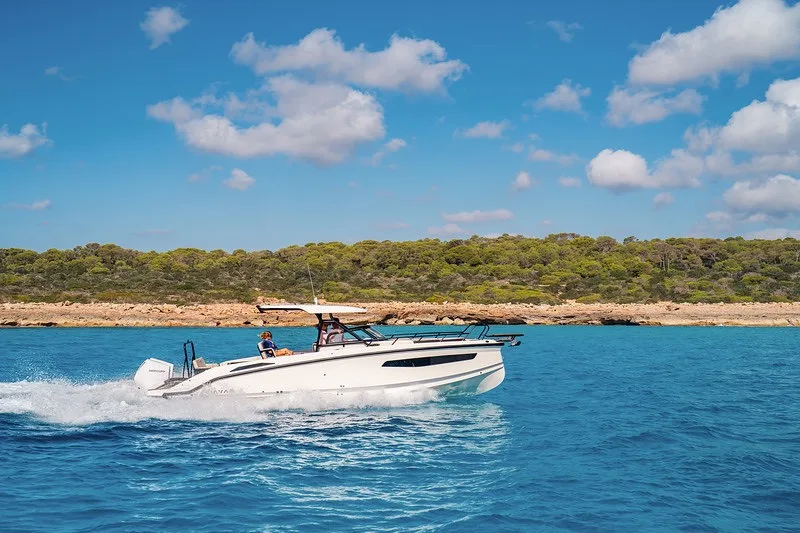
Ibiza weather in winter is milder than most people expect: sunny afternoons that often reach 15–18°C, weeks that alternate a couple of windy days with long settled spells, and — this is the part the climate tables never show — mornings when the sea turns to glass. We run our NAVAN S30 out of Marina Santa Eulalia all year, and between October and April the question we answer most is not "can you go out?" but "when is it good?". So here is how our skipper actually reads a winter week: the wind, the sea state, and the days worth boating.
What Ibiza weather in winter actually does
Forget the idea of a three-month grey lid. The winter Mediterranean moves in systems: a front crosses the western Med, the wind blows for a day or two, then high pressure builds back in and the island can sit under still, bright air for the better part of a week. Rain arrives concentrated in bursts — most of Ibiza's annual rainfall falls in autumn and winter — rather than as endless drizzle. Between systems come the days we live for: low golden sun, air so dry and clear that Tagomago looks close enough to touch from the marina wall, and barely a ripple inside the bays.
Cold is relative. On a sunny January afternoon out of the wind you'll sit comfortably in a jumper; underway, you'll want a windproof layer. What does end for most guests is swimming: the sea holds its warmth deep into autumn, but by midwinter a swim is a short, loud plunge rather than an hour of floating. We're honest about that on board and in our guide to chartering in winter.
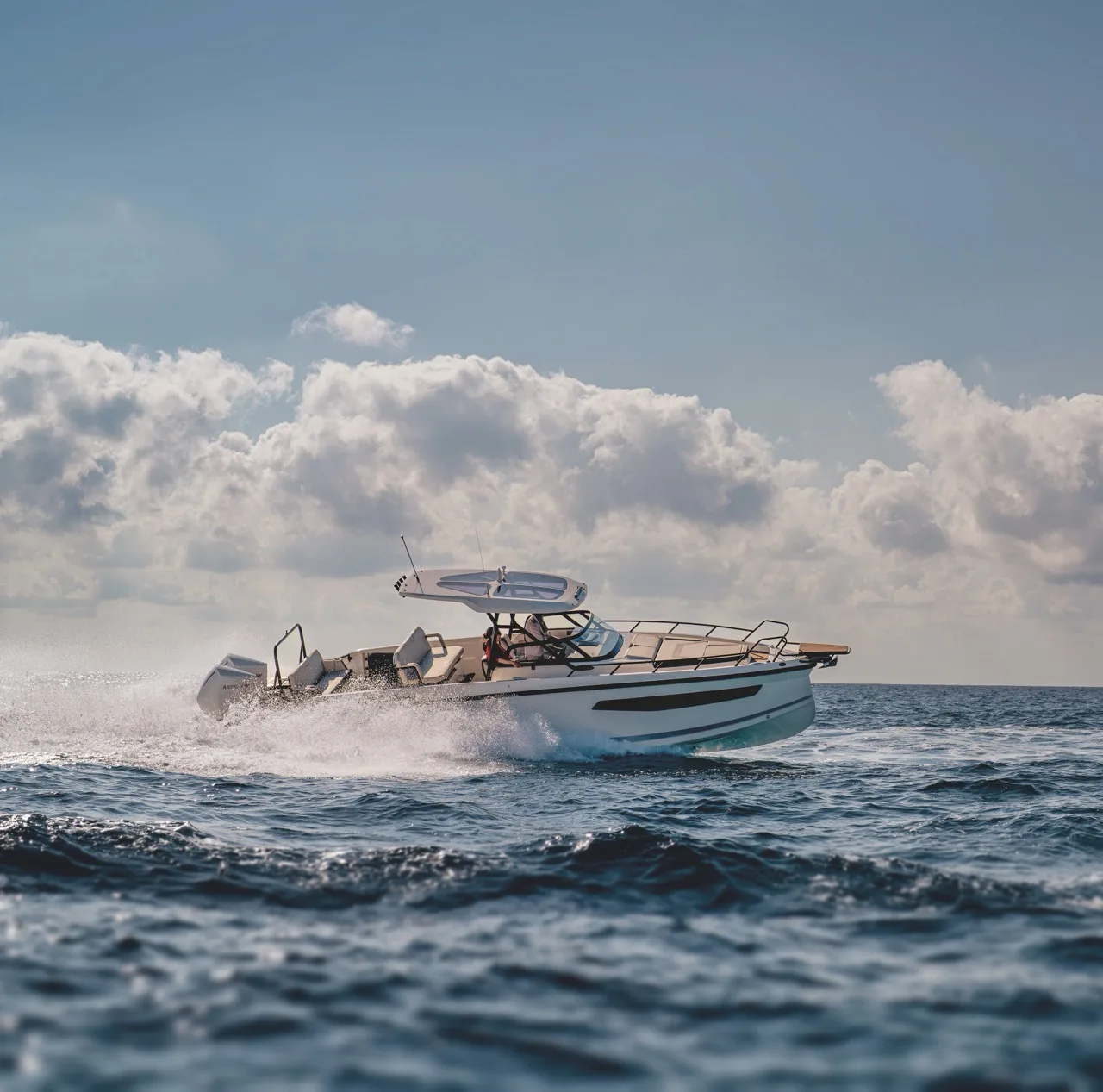
Why winter mornings are so often glass
In summer the island generates its own wind: land heats, air rises, and a sea breeze fills in almost every afternoon. In winter that engine mostly switches off. On a settled morning there is often no local wind at all — the marina flat as a mirror, halyards silent against the masts, the only movement the ripple our own bow makes leaving the berth. If the forecast does show a breeze, it usually builds later in the day, which is why our skipper likes winter starts: run the calm hours first, tuck in somewhere sheltered for lunch, and be home before the pattern shifts.
Swell keeps its own timetable. Waves outlive the wind that made them, so the first calm day after a blow can still carry leftover lump on open water. The second and third days of a settled spell are the jewels — wind gone, swell gone, the sea like poured metal.
Shelter is geography — and the east coast plays it well
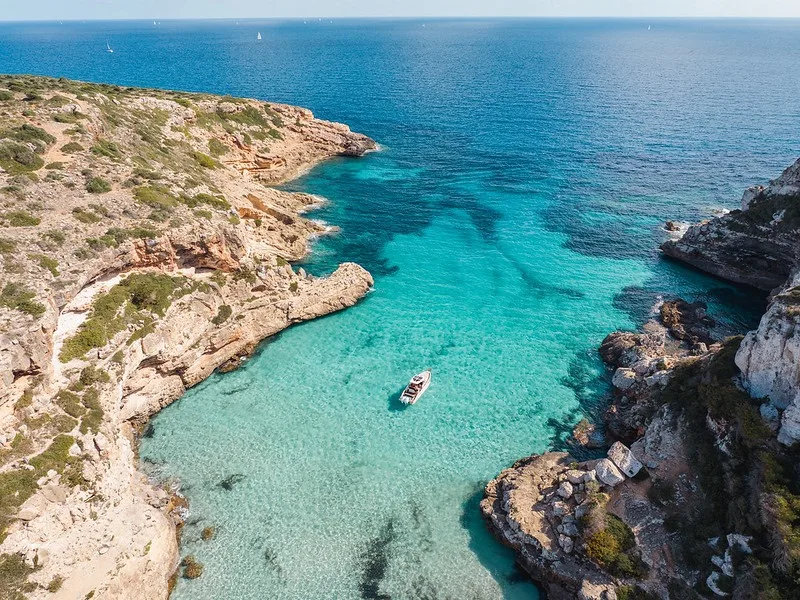
Most winter wind over the Balearics arrives from west through north — the ponent and the tramuntana of the old island wind rose. Santa Eulalia faces east, which puts our home water in the lee of the island's own high ground. On plenty of days when the west coast is white-capped, the stretch from Cala Llonga past Es Canar toward Tagomago is perfectly workable: sheltered, close to the berth, and full of coves that cut deep into the coast. It's the same water as in our skipper's tour of the east coast — in winter that advantage only grows.
When the wind swings east — the llevant, less common but real — the equation flips. That's a day we work the island's other flank, or simply wait. Reading which side of the island lies calm is half of winter seamanship here.
The anatomy of a weather window
A few days out
We watch the official AEMET forecast and the marine models from several days ahead. What we want to see is simple: a high settling over the western Mediterranean, forecast wind easing to a light breeze, and no fresh front within reach of your date. When that picture holds steady across model runs, the window is real.
The morning of
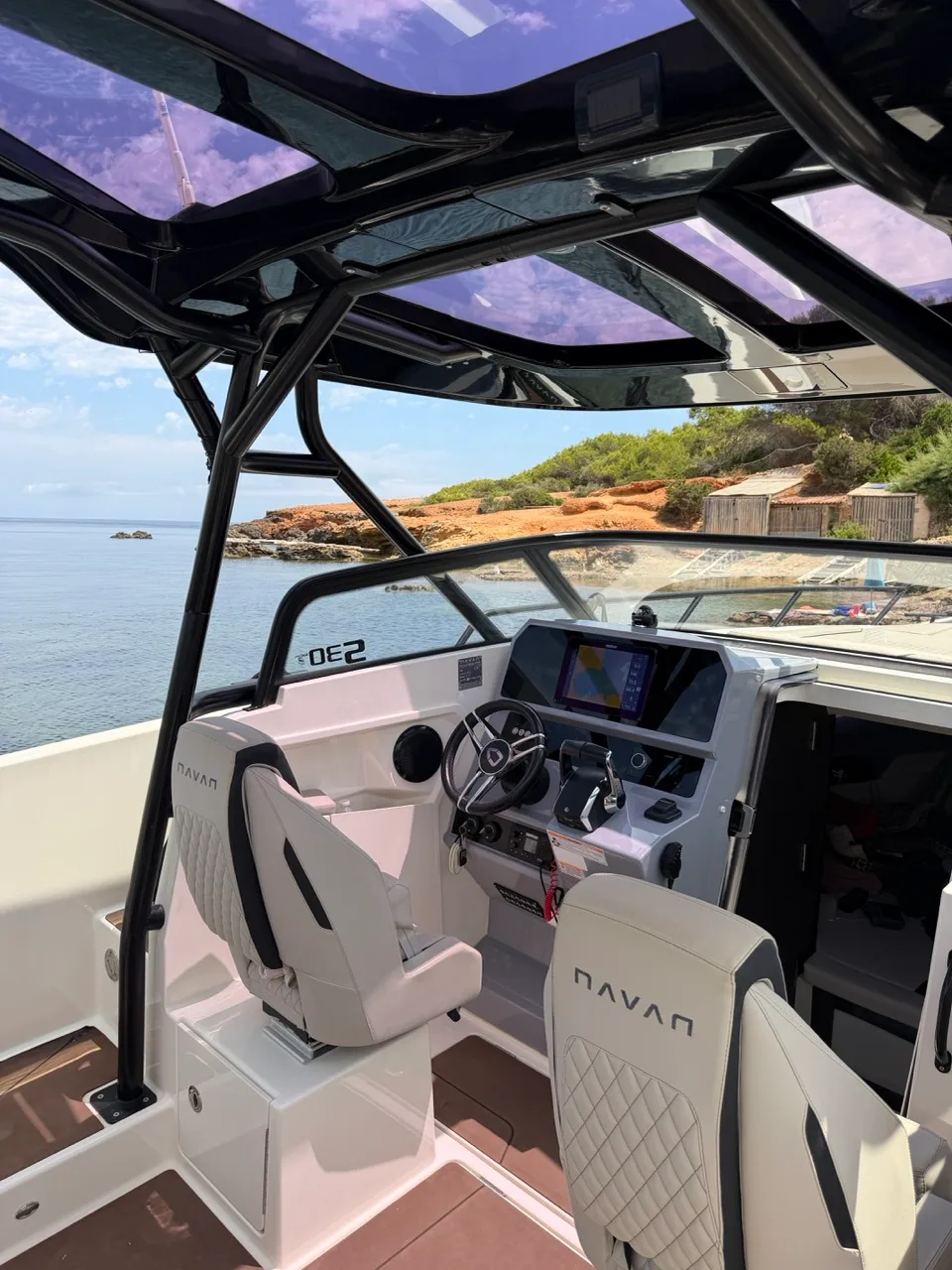
The final call happens at Berth H17, with the actual sea in front of us. Then we match the route to the conditions: a truly settled window puts the Formentera crossing on the table; an ordinary good day means the east coast at a relaxed pace. The eight-hour format stays flexible in winter — with shorter daylight, it often makes more sense to build the day around the warmest hours than to run a strict ten-to-six.
The days we say no
They exist, and pretending otherwise would be the fastest way to lose your trust. A hard tramuntana day with white caps to the horizon, or a front dragging rain bands across the island, is not a boat day — not for us, not for anyone. What we can promise is a straight answer: if your date looks wrong, you'll hear it early, and we'd always rather shift a day than force a rough one. If you're a nervous sailor, our honest piece on seasickness applies double in winter: calm windows exist, and choosing them is exactly what a skipper is for.
What the good days buy you
Here is the trade. In exchange for planning around the weather instead of the calendar, a winter charter gives you the lowest rate of the year — from €999 for the whole boat between October and April, fuel billed by actual use, full details on our prices page — and a coast with nobody on it. Anchorages that hold a dozen boats in August hold none. The light is the clearest of the year. A thermos of coffee replaces the cava bucket on the teak table, and the loudest sound at anchor is the chain settling onto sand. If you're on the island in low season and the forecast shows three calm days ahead, that's the moment to send us a message — the good days are real, and we know how to find them.