If your dates are flexible, take your Ibiza boat trip in September — or hold out for October. The sea is at its warmest of the whole year, around 24 °C well into late September, while the August fleet has already sailed home. And the price follows the crowds out: our full-day rate drops from the July–August peak of €1,600–€1,750 to €1,250–€1,450 in September, then towards €999 from October. Same boat, same coves, softer light — and the one thing no photo can show you: silence at anchor.
We run our NAVAN S30 out of Marina Santa Eulalia, berth H17, from spring until deep into autumn, so we see the island in both moods. Here is what actually changes once August ends, and why we tell our own friends to book the weeks the brochures skip.
The warmest swimming of the year happens after the crowds leave
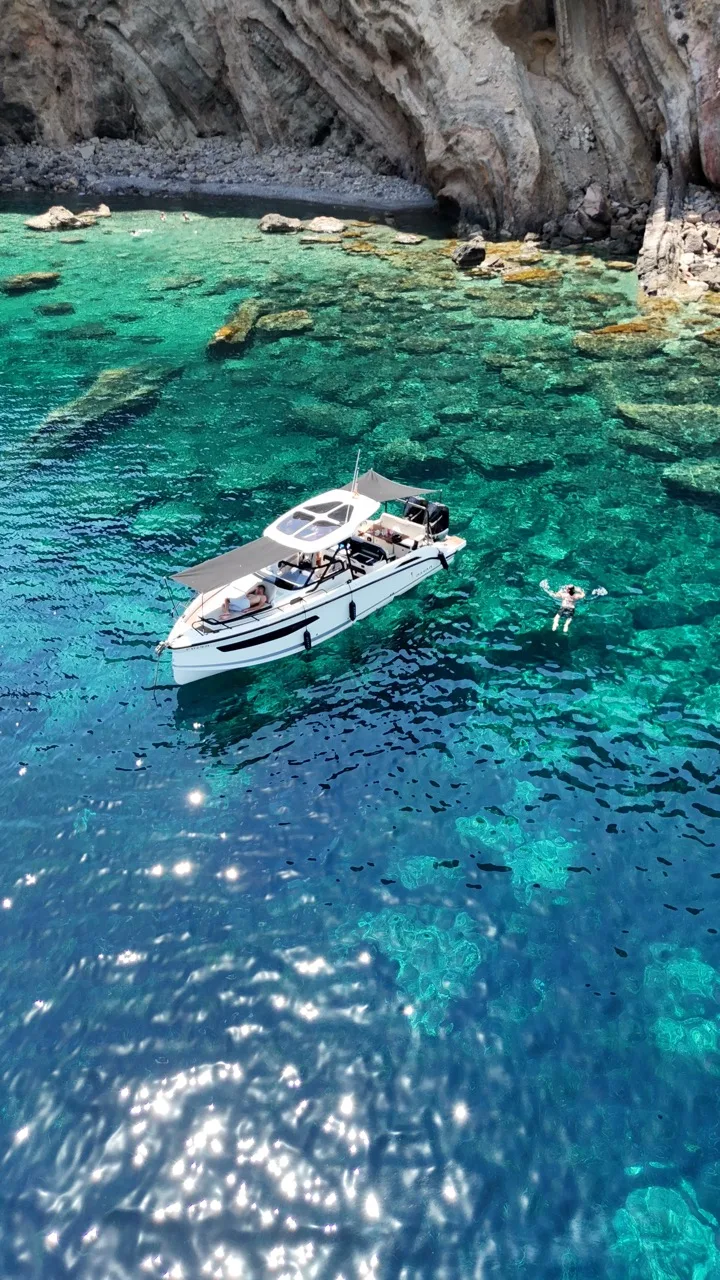
The Mediterranean runs on a delay. The air peaks in August, but the sea keeps banking that heat and pays it back through September and into October. The first jump off the bow in late September is genuinely warmer than the same jump in June — it surprises almost every guest who has only ever visited in early summer. The snorkeling gear on board gets more use in these weeks than at any other time of year: warm water, settled days, and coves clear enough to follow a fish along the rocks for as long as your lungs allow.
Anchorages that raft up in August sit empty in October
This is the change we notice most from behind the helm. In August, Cala Bassa and Cala Comte on the west coast fill with boats by late morning, and the lagoon off Ses Illetes on Formentera turns into a floating car park around lunchtime. We still love those places — the water earns its reputation — but in high summer, you share them.
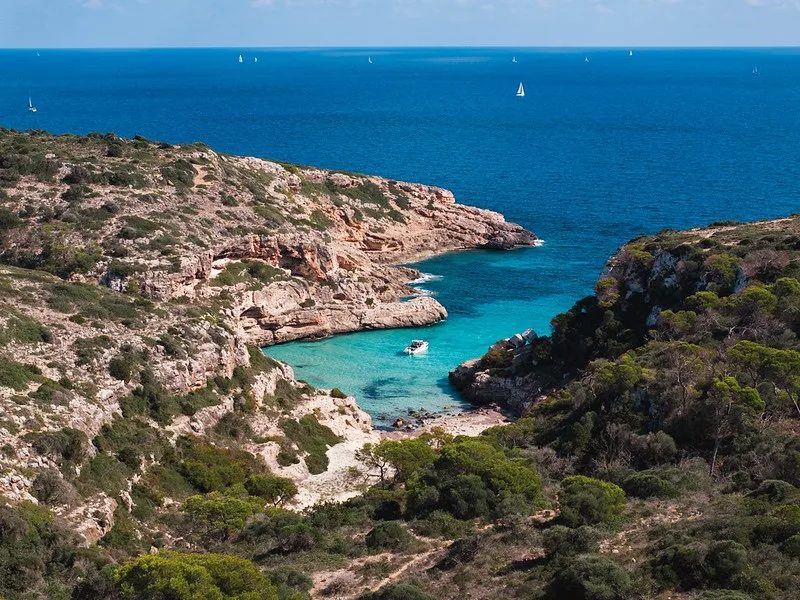
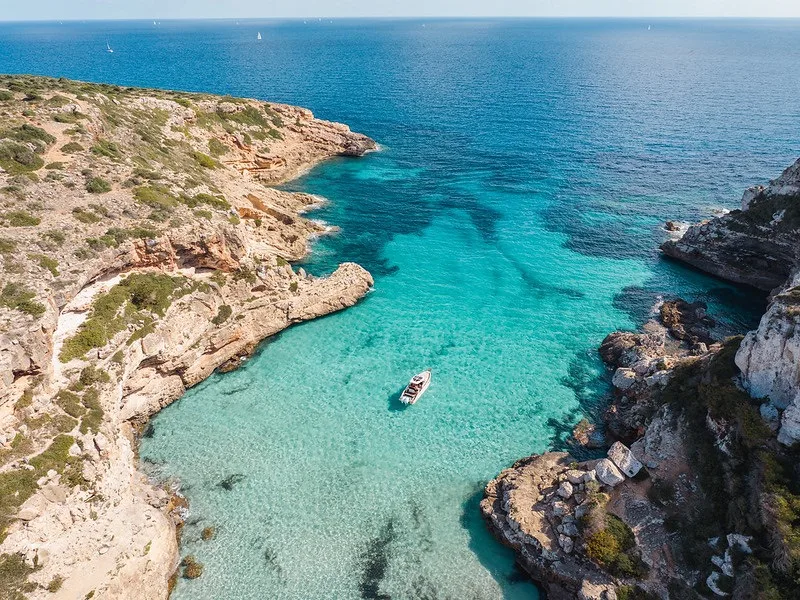
Come October, the same spots change character completely. At S'Espalmador, the uninhabited islet at the start of our Formentera route, you hear the anchor chain run out and then: nothing. No bass line from a neighbouring deck, no jet skis, just water against the hull. On our home east coast, Tagomago island sits about twenty minutes from the berth, and on an October weekday you may have that whole stretch of coast to yourself. Cala Llonga, Es Canar and the quieter northern coves feel like private discoveries again.
What an Ibiza boat trip in September or October costs
Our rates are per boat — the NAVAN S30 takes up to 10 guests — and always include a professional skipper, so nobody in your group needs a licence. Fuel is charged separately, based on what we actually use on the day.
| Season | Full-day charter (8 hours, per boat) |
|---|---|
| July & August | €1,600–€1,750 |
| May & September | €1,250–€1,450 |
| October–April | from €999 |
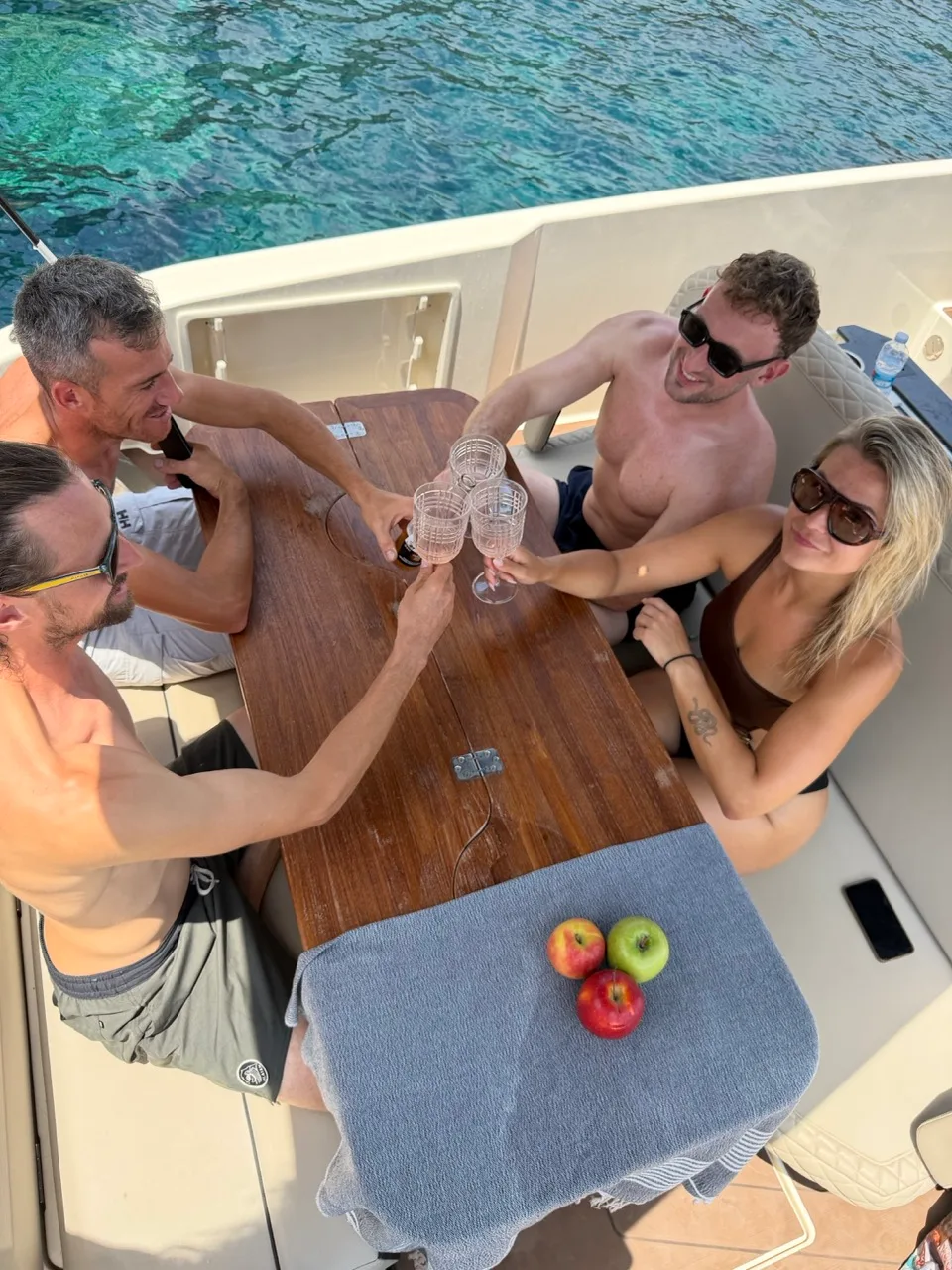
Split between ten, a September day works out around €125–€145 per person before extras; an October day starts near €100. For the full anatomy of a charter day — fuel, extras, deposit — read our honest cost breakdown, or see the current prices at a glance.
The autumn day: same hours, better light, easier tables
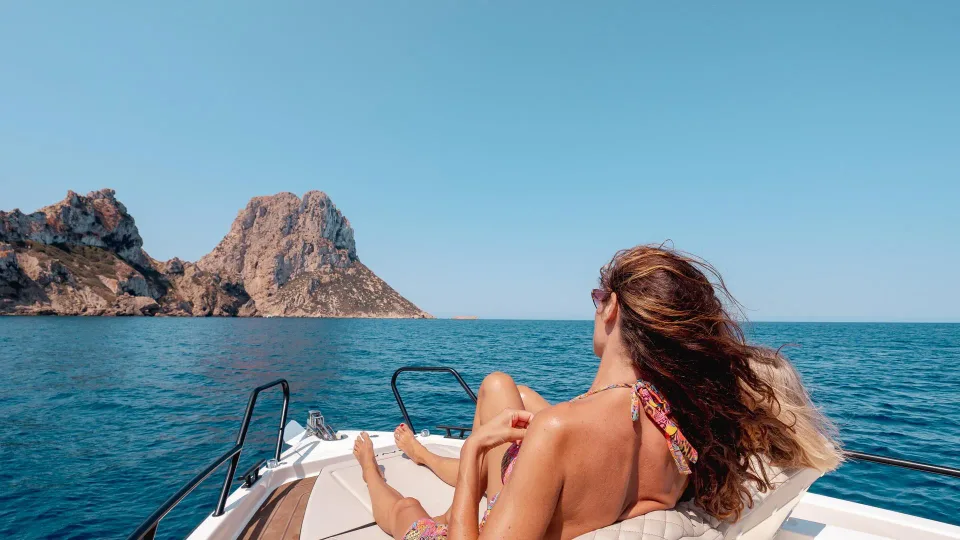
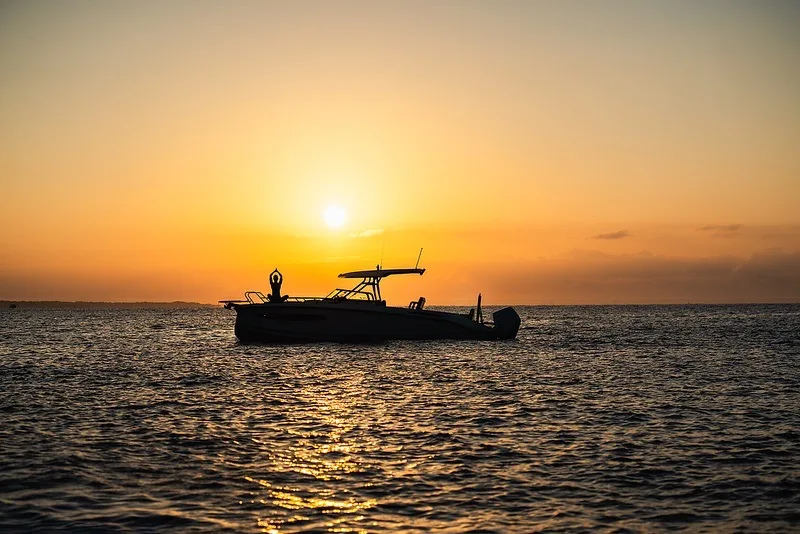
A full day is still eight hours, typically 10:00 to 18:00, and both signature routes stay open. The Formentera day is arguably at its best now: the crossing is quieter, the Ses Illetes lagoon has room to breathe, and beach restaurants that want a reservation far in advance in August can often be arranged at short notice — we book the table for you as part of the day. On the Es Vedrà route, the autumn light earns its keep: by the time we turn for home, the sun already sits low, the west-coast cliffs go amber, and golden hour happens while you are still on the water rather than after you have stepped off it.
The honest part: autumn weather, and how we plan around it
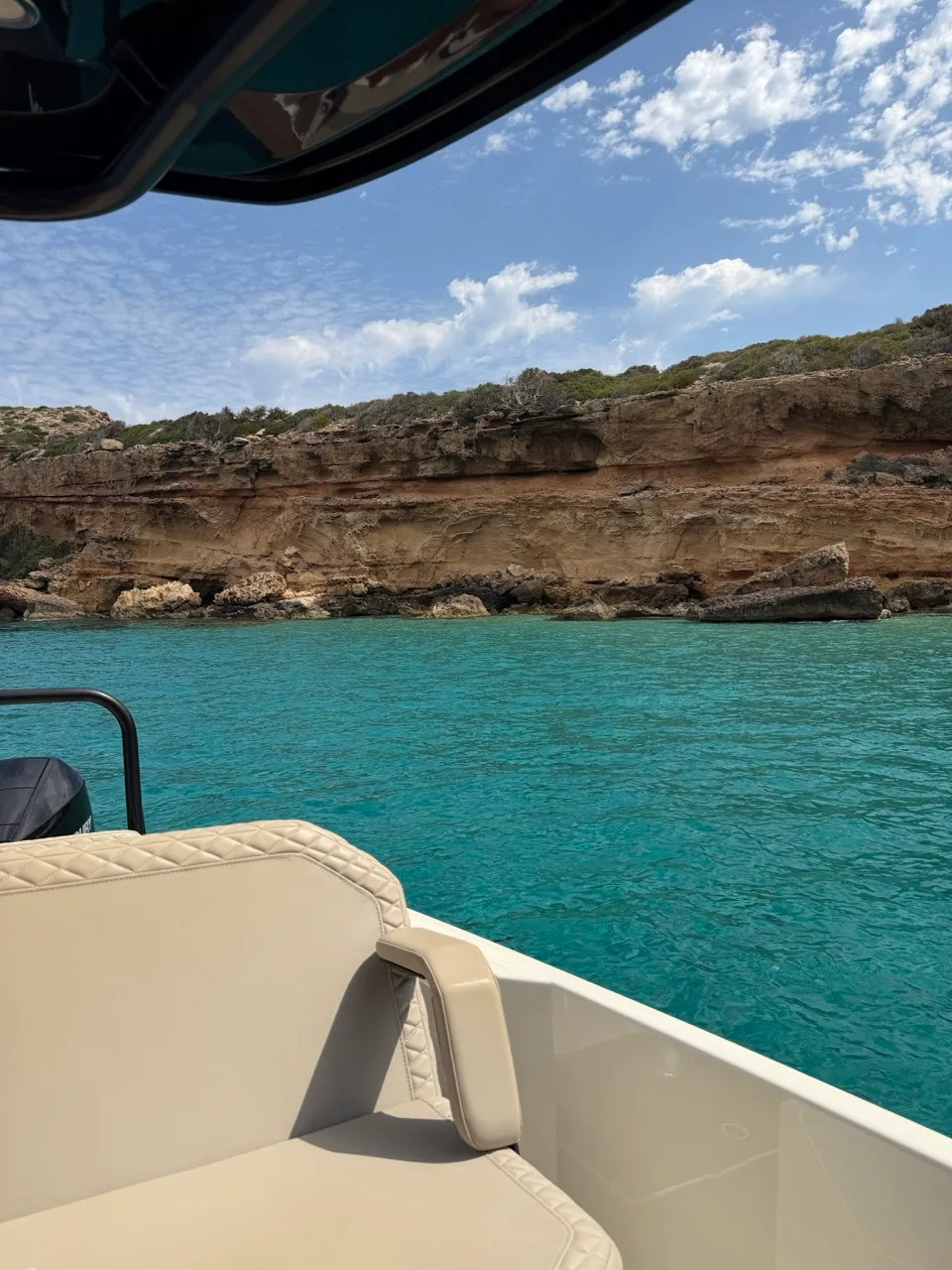
We won't pretend October is simply August with a discount. Autumn weather is more changeable: most days are glorious, but wind and swell need watching. This is where departing from Santa Eulalia genuinely pays off. The east coast is our home water and often the sheltered side when weather moves through — so if the west is lumpy, we build a beautiful day around Cala Llonga, Es Canar, Tagomago and the northern coves without ever crossing into rough water. Your skipper reads the forecast the evening before and proposes the calmest plan; the hours are yours, and the route flexes.
Two practical tips from the crew. First, aim for a weekday if you can — late-season weekends still draw local boats, while a Tuesday in October is about as close to an empty Mediterranean as it gets. Second, bring a light layer for the cruise home: the days stay warm, but once the sun drops, the air over the water turns soft and cool, and the ride back into Santa Eulalia is nicer with a jumper within reach.